The “Topological Petal” and the Time Experiment Attributed to Grigori Grabovoi
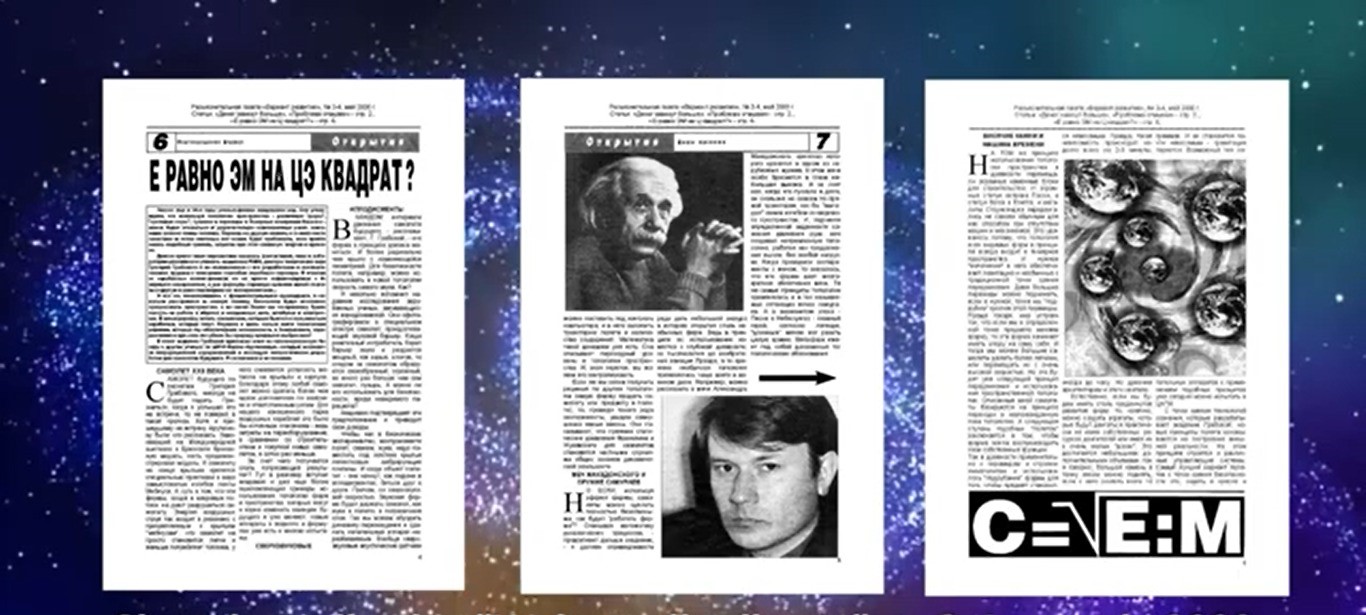
From the Russian press of the early 2000s, an account of a laboratory test never officially refuted
In the early 2000s, a Russian newspaper published an article describing an experiment conducted in the laboratory of scientist and academic Grigori Grabovoi, aimed at exploring the possibility of interacting with the structure of time through a physical topological form, activated also through the operator’s consciousness.
The report, written by a science journalist, was neither symbolic nor metaphorical in nature, but described a real experiment, carried out in the presence of witnesses, using physical devices, measurement instruments, and living biological samples.
The original video testimony (Italian translation)
In the following video, translated into Italian, the contents of the article published by the Russian press in the early 2000s are presented, together with the description of the so-called “topological petal” experiment.
The footage reconstructs the journalistic context of the time and the technical details of the laboratory test as they were originally presented.
Editorial note: the video is provided for informational and cultural background purposes.
The “Topological Petal” experiment
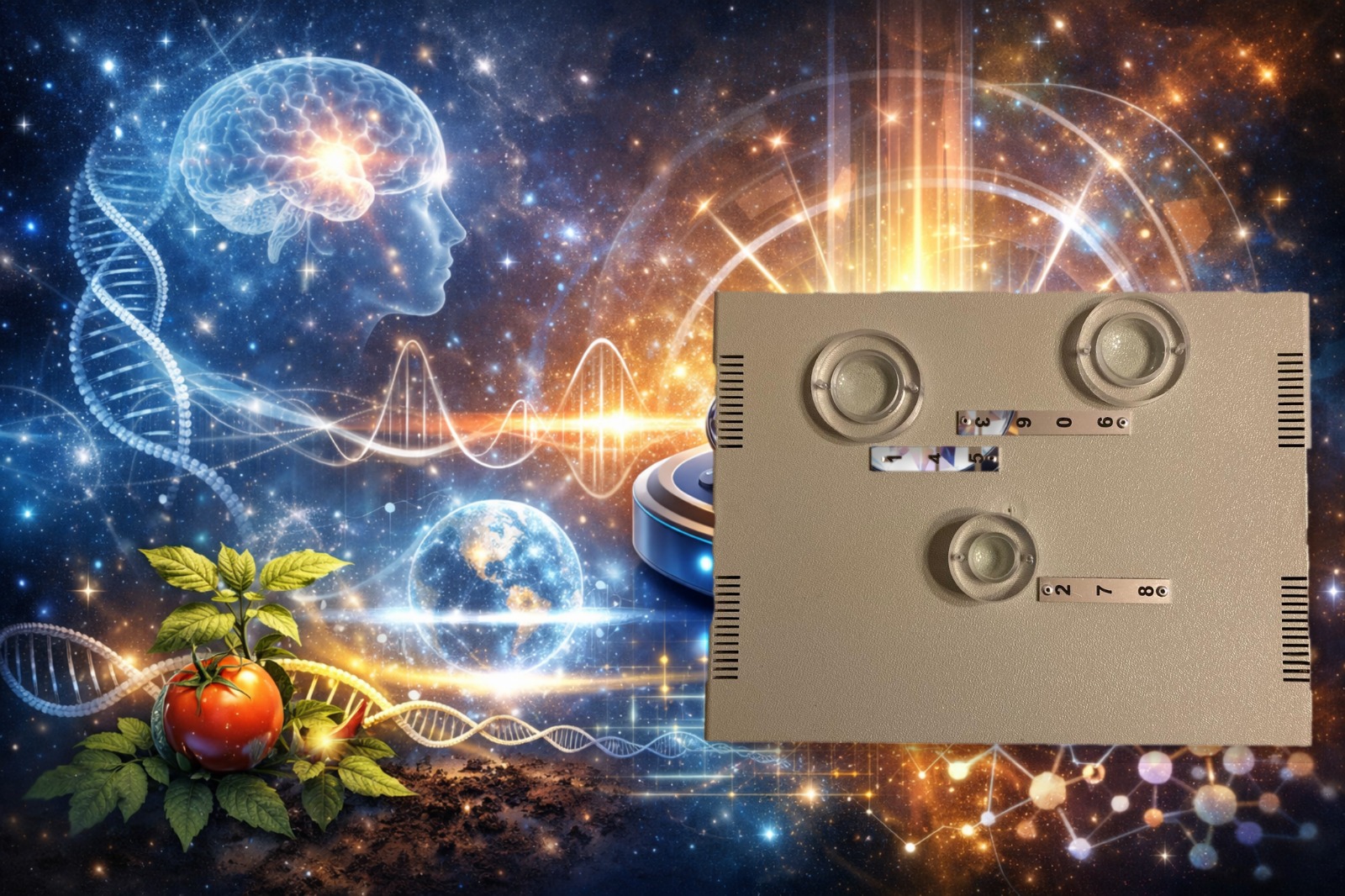
According to the report, the core of the experiment was a small device referred to as a “topological petal”, measuring approximately 5 × 5 cm, with a curved, drop-like shape. The geometry of the petal was designed to respond to topological transitions in space.
Two electrical sensors were connected to the structure to detect system polarization. The entire apparatus was immersed in a humid environment populated by rapidly growing microorganisms, selected for their sensitivity to changes in biological time.
A second container, identical but not exposed to interaction with the petal, was used as a control sample.
Activation and observation
The experiment was manually activated via a mechanical lever, and the operational phase lasted only a few seconds.
During this interval, according to the account:
- a mechanical clock connected to the system reportedly showed a reverse rotation of its hands;
- subsequently, the content of the petal exhibited a lower quantity of microorganisms compared to the control sample.
This variation was interpreted as a possible temporal reversal of the biological state.
In further tests conducted in the opposite direction, an acceleration of microbial growth was observed, suggesting an effect comparable to an anticipation of time.
Form, consciousness, and the structure of time
According to the article, the topological form was not considered a passive container, but rather an active vector capable of modifying the space-time relationship of the object involved.
The operator’s consciousness would act as an activating component: intention, combined with geometry, was described as capable of influencing the direction and density of time in a controlled manner.
Taken as a whole, the experiment was presented as a first practical verification of mathematical and topological principles related to what was referred to as consciousness-based control of reality.
An open testimony
The experiment, documented and publicly described, appears to have been discussed in an academic context within Grabovoi’s research, but it does not appear to have officially led to replications by other researchers.
It therefore remains an open testimony, of particular interest to those engaged in frontier science, mind–matter interaction, and research into the fundamental structures of time.
🏛️ Research perspectives
The Nikola Tesla Popular University (UniTesla) has decided, following a proposal by the author of this article, to initiate a program of study and in-depth analysis aimed at the possible experimental realization of the experiment described, along with the examination of other technologies attributed to Grigori Grabovoi.
The institution is also assessing initiatives for fundraising to establish a dedicated laboratory, with the objective of conducting experimental activities on quantum devices such as PRK-1U, PRK-1UM, and PRK-1UG, designed by Grabovoi.
Any future activities will be oriented toward study, experimental verification, and scientific contextualization of the technologies examined, within an exploratory and documentary approach to frontier research.